
Updates
Screw it, let’s do it! Top thirteen reasons why you should NOT wait to get your movie right.
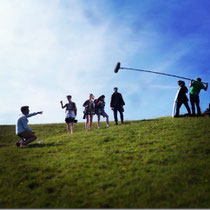
A blog that will entirely contradict my previous blog! (READ LAST ONE HERE)
In filmmaking, as in life, there is no right way, no best way, only the way that works for you, the way that chimes in with who you are.
And in storytelling and filmmaking, I believe there are no rules, only guides and principles.
Kick Ass 2 writer director Jeff Wadlow podcast… don’t ask permission, ask forgiveness
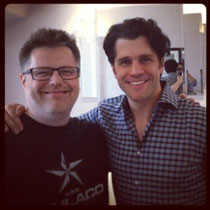
As I followed Hit Girl and The Mother F****r down a corridor at the absurdly opulent Claridges Hotel in London, I had to smile to myself at the surreality of this moment...
I had been granted a short audience during a break in their non stop press junket, to chat with Jeff Wadlow, writer director of Kick Ass 2.
How to get an 01 Visa to work in Hollywood (Podcast)
Earlier this week I recorded a podcast with attorney Joe Adams and Brit TV presenter (now US based) James McCourt about how Brits can make the leap to LA LA Land and launch a successful career in California.
If you are considering Hollywood as a destination for your career, this is a MUST listen podcast. Among many other things, you will learn…
Why would anyone invest in your film?

A producer and entrepreneur I know (who I won’t name) recently shared with me her views on film investment at the lower budget end, with specific regard to private investment. What’s interesting about this person is that she has had an extremely successful career in business before changing gear to enter the film industry.
Top 5 DIY Filmmaking Mistakes You Might Be Making

We all know that you can’t have your main character wearing an Adidas tracksuit. We’ve been taught that we must secure the script, actors and music licenses before we can exhibit our film. Unfortunately, CHAIN OF TITLE runs much deeper than that if a filmmaker ever hopes to have their film distributed or broadcast. I’ve outlined the top 5 mistakes that I see almost every DIY filmmaker make.
Guerilla Film Makers Pocket Book Launch A Success, and SUS Tops The Box Office Thanks To YOUR SUPPORT!

I can’t confirm it right now as I am not currently in my office, but I believe we are sold out of ALL 200 signed copies of The Guerilla Film Makers Pocketbook. It’s no surprise really as we actually sold nearly 100 at the book launch last week. You can see our shenanigans in the video below which was shot by multi talented Oli Lewington.
Reviews of the book are now starting to appear, such as here on Amazon UK (where you can also buy the book for just £8!)
Shooting microbudget on the steets of Brighton with Mark Banks

Last year I became aware of a low budget feature shot in Brighton called ‘Pictures Of Lily’, and so I asked the director, Mark Banks, to share his insights on his debut production… Over to Mark…
How to get help for your film when you REALLY need it

I get five to ten communications a day from people asking for help – advice, promoting a campaign, reading a script etc. I pride myself on helping as many people as I can (if I can), but sometimes it’s just not possible. And if I am honest, sometimes, the communication I am sent can lead me to hit the delete button...So what is it in some messages that makes people help, where others, they just bin? Here is a my take on how to get people to help you.
‘Welcome To The Punch’ writer director Eran Creevy interview about how he broke into the film business

As ‘Welcome To The Punch’ continues to pick up rave reviews, I thought I would share a rare, intimate and candid interview I did with writer director Eran Creevy a few years back about his debut feature ‘Shifty’. At the time, Eran had just begun developing ‘Welcome To The Punch’.
What shines through in the interview is his passion and chutzpah… you really have to hear the story about being the driver for Daniel Craig on ‘Layer Cake’. Watch below...
Nine ways to create a world class sound mix for your film

Last night I saw ‘Sinister’, a horror movie directed by Scott Derrickson.
It freaked me out. Plain and simple. And it has stayed with me too. And believe me, I have seen my fair share of horror movies.
So what was so terrifying?
The soundtrack. The score by Christopher Young was heart bangingly original.
12 ways to rewrite your British written spec script so it sells in Hollywood
If you’re thinking about writing for the American market, one thing that can trip you up is sounding too British. Confusing the reader with a British or European sounding ‘voice’, when they are expecting American (as they will in Hollywood) will pull them out of the story and reduce your chances.
1. There are many English / American word changes such as lifts=elevators; lorries=Trucks; mobile phones=cell phones, torches = flashlights, full stop = period, trousers=pants, etc. Getting an American to proof read your script and flag up those changes will be hugely helpful. And don’t forget the ‘fanny-pack’! ;0)
Breaking Into Hollywood: The Guerilla Pocketbooks arrive!
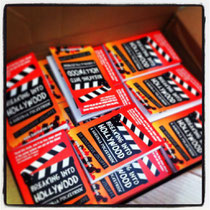
After a few weeks longer production time than expected, the new Hollywood Pocketbooks books have finally arrived. Those of you who pre-ordered, THANK YOU, the books will go out today.
If you don’t know about this book, it’s our first self published pocketbook in the Guerilla Filmmakers Handbook series – and one of many hyper-targeted pocketbooks we hope (read tiny but mighty).
Get a job in Hollywood… detailed insight into the dream factory

‘Read this book, you’ll be five steps ahead of the game before you get off the plane’
Matt O’Toole, 'The Expendables 1 & 2′
Over the last few months, Gen in LA has been putting the finishing touches to our new pocketbook, Breaking Into Hollywood: A Guerilla Pocketbook. We just sent it off to the printers today and we are super excited as this is our first Guerilla book that we have published ourselves.
Entering competitions and funding processes – top nine tips from the real world

As the 50 Kisses song initiative draws to a close, I thought I would share some of my personal observations about the entrants, what we can learn from them, and how we can apply those lessons to our own scripts and films when submitting to a process such as a competition or open call for submissions for funding.
First off, I want to say we had a mix of entrants, some good, some not so good, and some fabulous. You can listen to the shortlisted tracks below – I have set it to autoplay so you can listen while you read – it’s actually turned out to be a very special album of emerging musical talent. You’d like it if they watched your films right? So give their music a listen too, it’s damn fine.
Create a ‘moment’ in your story or film to get people talking

Last night I caught Tarantino’s ‘Inglorious Basterds’ on TV, the second time I have seen it. Whatever you think of Tarantino as a filmmaker and screenwriter, there is no denying he is a master of the individual dramatic ‘set piece’ – a single scene that in of its self-contained-self, is absolutely electrifying.
Like Hitchcock, he sets up a simple and terrifying problem – in the opening of ‘Basterds’ it’s ‘will the jews hiding under the floor be discovered by the Nazi commander Hans Landa?’ – and then he takes that setup stretches it out with mundane conversation, bombast, wit, menace, even utter silence… and of course explosive violence. I am not a huge fan of Tarantino films, but blimey Charlie, he sure can create ‘a moment’.
If money were no object, what film would you write, what movie would you shoot?

What if money were no object? It’s a simple question posed by British born American philosopher Alan Watts.
If you are like me, often getting stuck in the big question of art v commerce, financial survival, creativity or a lack of time to fulfill my creative needs…. then you will get a HUGE amount from this 180 second video.
Trust me, watch it, reflect and take action.
How to design a movie poster – top ten tips to grab the eye of a sales agent, distributor or audience member

Given poster pop art is all around us and everyone has access to photo / graphics software, I am often amazed how some filmmakers turn in polished films, will also deliver terrible posters and key artwork. So bad that often sales agents and distributors will throw it away and start from scratch.
And I am writing this post in light of the 50 Kisses poster competition that is opening up – http://www.50kissesfilm.com/posters/.
How To Record Your Own Foley Tracks At Home
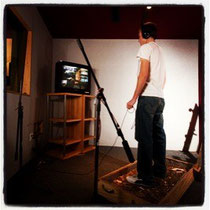
Having reviewed many of the films for 50 Kisses, one common thread is emerging.
A lack of solid audio post production, and in particular, a lack of foley.
The video below gives you a really good overview of a professional foley artists job – and you can do the same too.
How to recut your movie – mini masterclass in under ten minutes!
As part of 50 Kisses, we have invited filmmakers to act on our feedback and that of the community.
Already, one filmmaking team, Sweet Home Films in LA, has made their film over 20% shorter, fixed some audio problems and overall radically improved their work.
Below is the first cut which, like so many filmmakers also did, they submitted to 50 Kisses as their final edit.
Do you want to walk the red carpet OR own the red carpet?
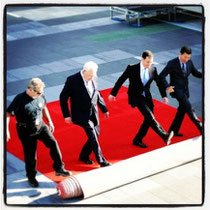
A couple of days ago I took delivery of a large roll of red carpet for a new event at the London Screenwriters’ Festival.
As I carried it to my car, I commented to a friend ‘why is it that I am carrying it and not walking it?’ It was an offhand joke, but it got me thinking – is it better to walk the red carpet, or to be the person who controls the red carpet?
Stills For Your Movie… what you MUST get
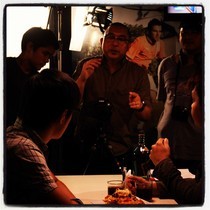
If there is one complaint I hear from Sales Agents over and over, it’s that filmmakers simply don’t provide enough good stills from their productions. And we are going through that right now with ‘50 Kisses’.
Most teams are getting shots, but only a few are getting killer shots.
And the game is changing too, we no longer need just photos of the actors in character.
Want great actors for your film? Write a script with a female lead

It isn’t grit or physical prowess that gives the feminine her heroic stature; it is her courageous ability to descend into the dark, forbidding places that lie within each of us in order to retrieve our essence. Strong stories aren’t masculine or feminine, they are a balance of both and understanding how to engage the feminine heroic will add a great deal of depth to a writer’s palette.
For years I have been saying create stories with female leads as the talent pool of actors available is so under utilised.
Where are you drawing your inspiration from?
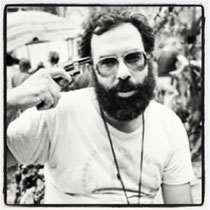
The documentary behind the making of Apocalypse Now (Hearts Of Darkness) is for me essential viewing for all filmmakers. I have recommended it on pretty much every course I have ever run as it’s one of a handful of docs that genuinely captures the madness of production.
Watching it always reminds me of my first movie, The Runner – we were kids wandering North Wales mountains with too much kit, too much caffeine, no boundaries, automatic weapons and a heck a desire to leave our mark on the world. Madness yes. Great film? Well it was certainly ambitious and a great experience.
Top 18 Strategies and Tactics To Get stuff Free or Massive Discounts

I was speaking with a filmmaker yesterday who said ‘I really need to get you to help me get what I need as you seem to always get a discount…’ That launched me into a quick breakdown into how to get stuff free.
1. Ask
Most people don’t ask for help. Don’t assume the answer will be YES or NO. Ask.
How much pain are you prepared to inflict?
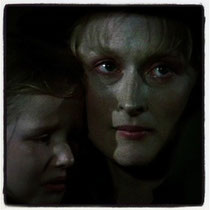
Having read literally hundreds and hundreds of short scripts over last few weeks as part of 50 Kisses, a piece of advice I was given many years ago is echoing through my mind.
‘You need to put your characters through more pain…’
This advice was given to me after a close and learned friend had read one of my scripts.
Transcript from the Spielberg, Lucas and Kasdan ‘Raiders’ story conference

After doing a long overdue spring clean of the LSF Delegate network, I came across a thread from David Wigram about the Raiders Of The Lost Ark story conference between Spielberg, Lucas and writer Kasdan. That REALLY happened!
There was a link to this PDF – HERE – which frankly is a goldmine for filmmakers and screenwriters alike.
The complete guide to UK film distribution for indie filmmakers

I asked my pal Amir who has worked as a film maker AND in UK distribution, to offer some notes for film makers entering the market. I didn’t realise he would pen an epic and essential guide to film distribution… Blimey! Over to Amir…
Film distribution is pretty much the final frontier that the independent filmmaker of today has to tackle. The intimate dealings are a mystery to most – but if you can understand and embrace the
process, you’ve just bettered your chances of having a sustainable career in this strange old industry of ours.
How to make a DCP (Digital Cinema Package) on your own computer

When I heard my friend Danny Lacey was figuring out how to make a DCP at home, I asked him to share what he learned! WOW! The DCP is the last technical hurdle to overcome when you want to get your movie into a professional commercial cinema – over to Danny…!
Up until now the words Digital Cinema Package (DCP) had usually been followed by many pound (or other currency) signs. Numbers like £10k, £30k and £50k+ were being used. My initial reaction…? We
are all doomed, there’s no way I’m getting my short films shown at high resolution on the big screen.
Top ten Reasons Why Film Makers Screw Up In High Level Negotiations
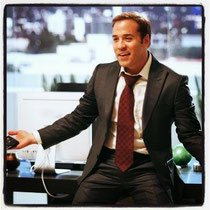
At some point in your career, or in the life of your film, you will find yourself cutting a deal where the outcome could be life changing… or career killing!
The reason these negotiations usually end up screwing the filmmaker is quite simple. Filmmakers may be great at blagging stuff for free, or convincing mates to work through the night, but that is NOT high level negotiation.
Testing your film with an audience, top five editorial mistakes you CAN FIX

Last week I attended a test screening of a feature film at BAFTA and I thought I would share my thoughts on common editorial mistakes when close to locking picture.
Common mistake number one… It doesn’t make sense (the elephant in the room that the film makers cannot see).
Everyone who read the script, then saw the actors perform it, and finally viewed the edit, will have no problem understanding the story. But they know the story, unlike the audience who get to experience it for the first time when they see the movie. Subtleties of performance or lines of dialogue that mean one thing to the filmmakers can mean something almost diametrically opposed to the audience.
Ten simple ways to make your film pitch more effective

Over the last few days I have been training filmmakers from across Europe as part of a Euro initiative called Four Corners – and it’s been a blast! I have learned tons about pitching by listening to the filmmakers and mentoring them. So what where the big takeaways?
1. Get the genre clear
Without the genre framework, the person listening to the pitch is kind of lost at sea and unable to image the story in their mind.
Top Ten Microbudget Tips: With a crew of 2 and budget of £500… what can be achieved? Jaw dropping work…

I asked DSLR magician Ken Simpson to share how he manages to pull off amazing movies with very little kit, crew but tons of guts. Here’s his detailed response… pretty amazing advice…
I’ve had more than a few people ask me how I was able to achieve such a high level of production value with my last few short films, “Ri-sip-ruh-keyt”, “Worked For Me” and “The Fall and Rise of Mickey”. I thought I’d share with you my overall approach for achieving big budget results with little to no money.
How to begin a career in the creative industries… Or, how to reboot an old career in the creative industries.

Neil Gaiman Addresses the University of the Arts Class of 2012
What an extraordinary address. If you work as a creative freelancer, or you create stuff, no matter the discipline, clear 20 minutes from your schedule, switch off the phone, shut down Twitter and Facebook and watch this.
Rare archive podcast interview with legendary American screenwriter and director John Hughes

I posted a link from ‘Planes Trains and Automobiles’ on Facebook last night (below), as this movie as well as ‘Uncle Buck’, have endured as trusted comedies that, no matter how often I see them, still move me to tears and stitches. What I love about the scene above is the sheer craftsmanship – all those visual gags followed by that lovely silence as the case goes flying. Fabulous.
My first movie, ‘Necronomicon, book of the dead’
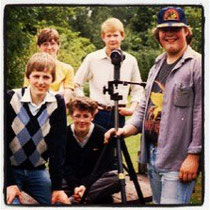
So there I was in a geology class, when it hit me, I want to be a filmmaker.
Now this is back in the day when there was no internet, no books on filmmaking, no DVD chat tracks… there were just movies that were made by wizards, and the very, very occasional hour long gold-dust-documentary about shooting an Indiana Jones or Star Wars film.
In short, if you wanted to make movies, you had to figure it all out yourself.
How to make tough film career choices

You know most of the time we pass through life, allowing circumstance or others to make choices for us. In many ways it’s inevitable, it’s simply too hard to swim against the current all the time, and those who do, usually burn out.
The trick is making the distinction between what is, and what is not, important to you. And then make an active choice, even if you have to swim against the current to do it.
Hurry up and wait… How long will it take to shoot your film? Top ten tips
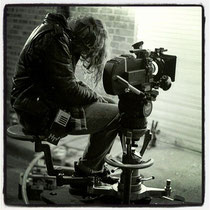
Every film is a prototype, different story, different locations, different characters, different crew, different… well different everything. And so there is no one size fits all. If that’s the case, how can you work out how long it will take to shoot you film, so that you can budget and schedule accordingly? Post the London 48 Hour SciFi challenge, here are some thoughts about how long stuff takes to shoot (especially relevant to features) and how best to approach it….
If everyone has everything, how do you compete? In praise of Actors…

Everyone can now get a great camera and lenses. Post production at home in native 2k, with full After Effects integration opens up endless grading and VFX possibilities. Technology has transformed film making. A few hours on Vimeo will illustrate just how mind bogglingly sophisticated the world has become.
So, when working in drama, how can we compete with all of those filmmakers? And how can we compete against the mighty Hollywood? What should we choose to make?
How to get MASSIVE results when you ask for help for your movie
I get five to ten communications a day from people asking for help – advice, promoting a campaign, reading a script etc. I pride myself on helping as many people as I can (if I can), but sometimes it’s just not possible. And if I am honest, sometimes, the communication I am sent can lead me to hit the delete button…
So what is it in some messages that makes people help, where others, they just bin?
Here is a my take on how to get people to help you.
iTunes and Shorts International Royalty Report… What’s the deal?
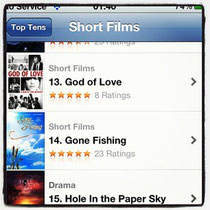
I thought I would share the recent sales report I got from iTunes via Network Ireland for my short Gone Fishing. The report landed on my desk around the same time as VFX expert Russ Wharton emailed me from his iPhone commenting that Gone Fishing is still charting VERY highly on iTunes shorts – when he took this frame grab we were at 14. I have occasionally checked in and we are usually toward the top of the charts, which is great news.
So how do the figures correspond?
Top Ten Kick Ass Tips For Shooting Action Horror From ‘Zomblies’ Director Dave Reynolds
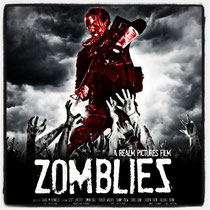
Dave Reynolds, who you may recall from The Production Office, finally released his horror movies Zomblies on YouTube, and so I asked him to write me his top ten tips for shooting Zombie movies. You can watch the FULL MOVIE below too (remember to go full screen and switch to HD).
Top Ten Tips For Titling Your Movie

Is the title of your film killing its chances?
Consider, the title for your film or script is the VERY FIRST thing most people will experience about it. The first question asked is usually ‘what’s it called?’
And like all first impressions, you want it to be a good one.
What REALLY makes a film maker successful? One simple strategy…
Being in a room with 370 energised, passionate and determined film makers for a whole weekend is something that inevitably creates an electric atmosphere of possibilities.
And while many of the film makers present have been thanking me for their own experience and breakthroughs at the Guerilla Film Makers Masterclass, I have been reflecting on what I also got from the experience.
Failing to plan is planning to fail… Film making success lies in pre-production

I am spending the weekend building and updating my presentation for The Guerilla Film Makers Masterclass on June 4th and 5th. (90% sold out now, so don’t wait if you want to come, and use the discount code CHRISJONESBLOG to get it for £60, reduced from £119.00 – go here http://www.guerillamasterclass.com)
And I wanted to expand on some of my thoughts, reflecting on the shoot a couple of weeks ago.
What's the secret to getting through a huge script on limited resources?
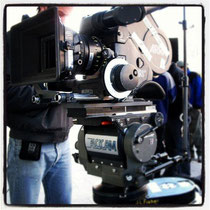
‘If you are going through hell, keep going…’ That’s what Winston Churchill said at any rate.
And hell is what I was going through last Tuesday.
Not because of a catastrophe on set or difficult actors, or even a crew that was making mistakes. On the contrary, everyone both in front on the camera and behind the camera delivered world class results and offered a 101% professional attitude.
It was hell simply because we had SO much to shoot in one day.
Top Ten Tips For Making A Contract, a Film Makers and Producers Guide

Following last weeks post where I offered blog readers the contracts you could use on your film, I thought I would add a list of tips for contracts. I called it the ‘Top Ten’, but of course, like any contract negotiation, that expanded…! So it’s a top fourteen! You can read about the free film makers contracts on the blog here.
A guide to film finance and funding – are you going to get funded or financed?

Have you made a ‘film’ or a ‘movie’? More importantly, are you seeking ‘funding’ or ‘financing’?
Some time ago I blogged about this cartoon by Alan Parker. I love it because it captures the essence of why I believe state funding for film is not always a good thing, how it fosters a sense that film making is an art and often not bound by commercial sensibilities.
Guerilla Film Makers Pocket Book Launch A Success, and SUS Tops The Box Office Thanks To YOUR SUPPORT!
I can’t confirm it right now as I am not currently in my office, but I believe we are sold out of ALL 200 signed copies of The Guerilla Film Makers Pocketbook. It’s no surprise really as we actually sold nearly 100 at the book launch last week. You can see our shenanigans in the video above which was shot by multi talented Oli Lewington.
Reviews of the book are now starting to appear, such as here on Amazon UK (where you can also buy the book for just £8!)